
HDPE bottles are trusted across industries because they’re durable, lightweight and cost-effective. But here’s the thing: even a small flaw in blow molding can lead to leaks, instability or product failure. Brands often notice issues only after filling, shipping or shelf display, which is why understanding these problems upfront is essential.
Let’s break down the most common problems seen in HDPE blow-moulded bottles and containers, why they happen and how manufacturers like Regent Plast work around them.
1. Leakage and Poor Seal Integrity
Leaks are the biggest red flag in HDPE packaging. They usually come from:
- Improper fusion of molten resin
- Contamination inside the melt
- Inaccurate blow-pin or mold alignment
- Uneven neck finish
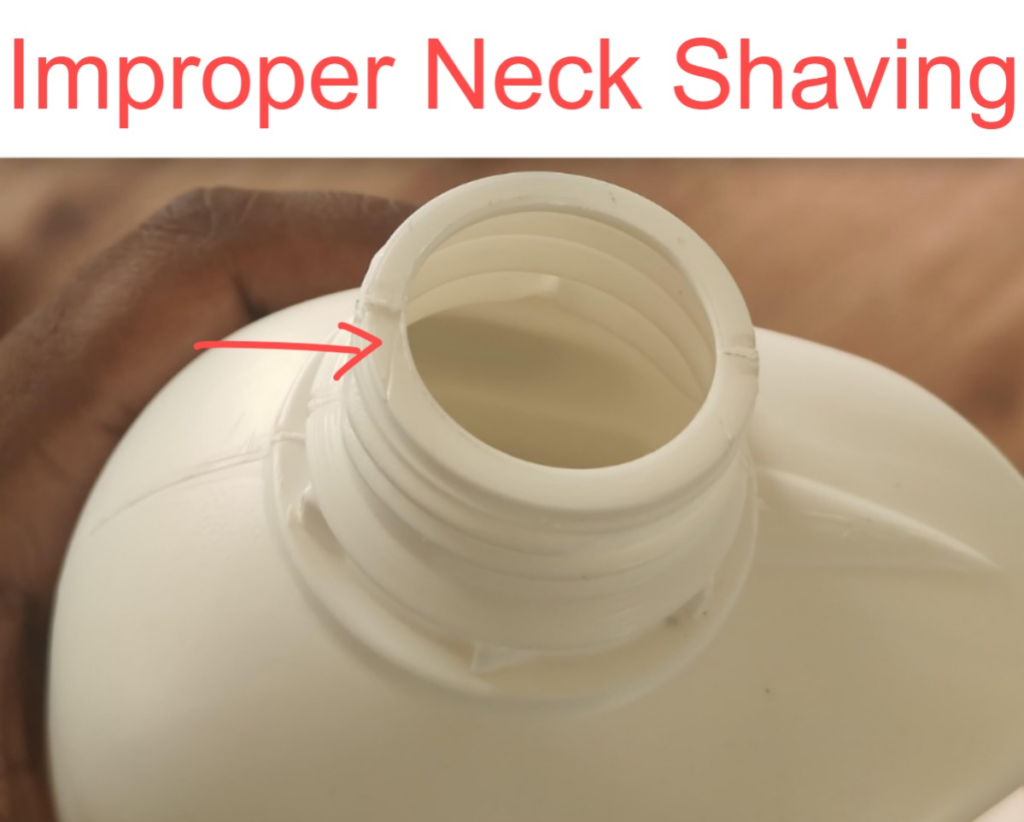
A leak doesn’t just ruin the bottle; it disrupts entire production lines. At Regent Plast, this is prevented through strict testing of seal strength, top load and dimensional accuracy. You can explore how these tests are performed in detail here:
How HDPE Bottles Are Tested – A Complete Guide
2. Rocker Bottom or Unstable Base
If a bottle wobbles or tilts, the base wasn’t cooled or formed correctly. Common reasons include:
- Insufficient cooling before ejection
- Trapped air that expands inside the bottle
- Thick parison at the bottom that prevents proper closure
This impacts shelf presence and transport stability. Starting with a well designed bottle, and shifting gears to the mold and cooling system eliminates this. Pareto’s 80/20 principle applies here, and working with an experienced packaging company, such as Regent Plast’s helps eliminate a vast majority of future problems.
Read here, about The Role of Packaging Design Thinking in B2B Industries
3. Tearing at the Weld or Pinch-Off Area
Weakness at the weld line is another frequent defect, especially for bottles with handles or thicker bases.
It happens when:
- The parison is too thin in the weld zone
- Mold closing speed is incorrect
- Cooling is uneven
- Deflashing is too aggressive
High-precision auto-deflash blow moulding machines significantly reduce this issue. Read how they improve bottle consistency here:
Why Auto-Deflash HDPE Bottles Are Superior in Quality
4. Surface Defects and Visual Imperfections
These include:
- Black spots
- Bubbles or voids
- Rippled textures
- Horizontal flow lines
They usually come from resin contamination, moisture, uneven parison temperature or premature contact with the mold wall.
Quality-driven manufacturers avoid this through continuous resin filtration, drying and stable temperature control supported by repeatable lab tests for appearance and structural integrity.
5. Uneven Wall Thickness
Blow molding demands balance. If the parison is inconsistent, the bottle wall becomes too thick on one side and too thin on another.
The result?
- Poor drop resistance
- Higher shrinkage
- Deformed shape during storage
- Weak structural performance
A good tooling design and proper parison programming fix this. To understand how bottle design itself influences outcomes, look at this guide:
How to Design Bottle Packaging – A Practical Guide for Brands
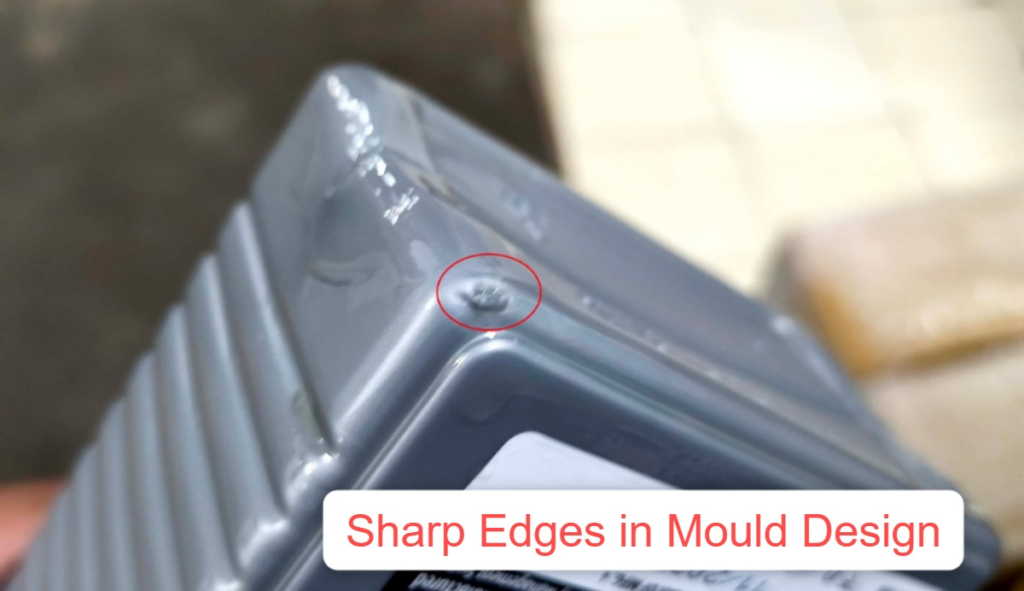
6. Trim and Finish Imperfections
Flash that cuts unevenly leads to sharp edges, poor aesthetics or extra rework.
Typical causes:
- Excess parison thickness
- Low clamping force
- Incorrect mold temperature
- Poor deflashing setup
Auto-deflashing technology and precise mold matching help eliminate these problems altogether.
7. Cracking Caused by Poor ESCR Performance
Sometimes bottles crack not during molding but weeks after filling. The real culprit is low ESCR (Environmental Stress Crack Resistance) of the HDPE grade.
Stress from:
- Chemicals
- Detergents
- Oils
- Temperature variations
- Internal pressure
can cause microcracks that grow over time.
A deeper explanation of ESCR and why it matters is covered here:
What Is ESCR for HDPE Bottles?
How Regent Plast Prevents These Problems
Every potential flaw in HDPE blow molding connects to three fundamentals:
- Material quality
- Machine precision
- Testing discipline
Regent Plast addresses all three through:
- A fully equipped in-house testing laboratory
- Automated auto-deflash blow moulding machines
- Advanced design-for-manufacturing support
- Strict quality checks detailed in our testing guide
- Decades of experience with automotive lubricants, pesticides, FMCG, pharma, chemical and personal care packaging
This is why global private-label brands trust Regent Plast to supply HDPE bottles that perform consistently throughout the product lifecycle.
Read about the Unseen costs of getting your packaging wrong!
Conclusion
Most issues in HDPE blow-moulded bottles come down to the same core idea: mistakes in design, material selection or process control lead to costly packaging failures. When brand owners rely on experienced packaging companies such as Regent Plast who have invested in precise blow-molding systems, stronger testing protocols and smarter design, these problems disappear.
Pitch for Regent Plast
If you want bottles that don’t leak, crack, wobble or fail under shipping stress, Regent Plast is the partner built for your standards. Our engineering team, tooling specialists and lab experts work together to ensure every bottle meets global performance benchmarks. Whether you need customised HDPE packaging or large-volume production, we deliver consistency, durability and packaging that enhances your brand.
Ready to upgrade your bottle quality? Visit regentplast.com and let our team guide you through a smarter HDPE packaging strategy.